People think HR just handles hiring and salaries. In reality, human resource management runs a much wider set of functions that decide how well a company attracts, grows, and keeps its people. Once you see HRM as a system of functions, it is easy to spot what your own HR team should be doing. This guide explains the functions of HRM in 2026, split into managerial, operative, and advisory groups, with a clear Delhi and India compliance angle so you know exactly what each function covers.
- Three groups: HRM functions fall into managerial, operative, and advisory categories, and a strong HR team runs all three.
- Managerial functions: These are planning, organizing, directing, and controlling the people side of the business.
- Operative functions: These are the day-to-day activities, from recruitment and training to payroll, compliance, and employee relations.
- Compliance is core: In India, HRM must handle PF, ESI, TDS, and labour laws, which makes statutory work a real function, not an add-on.
- Strategic shift: Modern HRM moves from paperwork to strategy, using data to plan the workforce.
- Software as the backbone: HR software runs the repetitive functions so the team can focus on people and growth.
What Is Human Resource Management?
Human resource management, or HRM, is the function that manages an organisation’s people across their full journey, from hiring to exit. It covers recruitment, onboarding, payroll, training, performance, compliance, and employee relations.
In short, HRM turns a group of individuals into a productive, compliant, and engaged workforce. The functions below are the building blocks that make that happen. Understanding them tells you what a capable HR team actually does every day.
The Two Main Types of HRM Functions
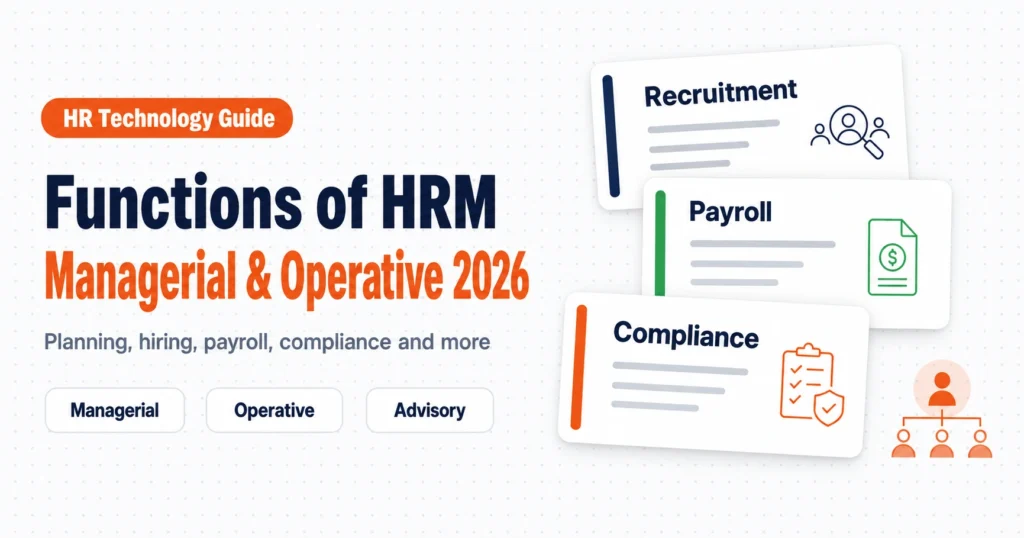
HR experts usually split the functions of HRM into two big groups, with a third advisory role on top. The table below gives the quick view before we go deeper.
| Function Type | What It Covers | Focus |
|---|---|---|
| Managerial | Planning, organizing, directing, controlling | Strategy and direction |
| Operative | Recruitment, training, pay, compliance, relations | Day-to-day execution |
| Advisory | Guiding leadership and line managers | People-first decisions |
Managerial Functions of HRM
Managerial functions are the strategic side of HR. Here, HR thinks and plans rather than just executes. There are four.
Planning
First, HR forecasts how many people the business needs and with which skills. It reads business goals, market trends, and current capacity, then builds a hiring and development plan to close the gap.
Organizing
Next, HR designs the structure that makes work flow. It defines roles, sets reporting lines, and allocates authority so that responsibilities are clear and teams are not left overlapping or exposed.
Directing
HR also guides and motivates people. Through communication, goal setting, and recognition, it keeps employees aligned with company objectives and engaged in their work.
Controlling
Finally, HR measures results against the plan. It tracks performance, spots gaps, and applies corrective action, so the people strategy stays on course through the year.
Operative Functions of HRM
Operative functions are the hands-on work that shapes the employee experience every day. This is the largest group, and it runs the full employee lifecycle.
HR Planning and Job Analysis
HR defines each role before hiring for it. It sets the responsibilities, qualifications, and expectations, which gives every later function, from recruitment to appraisal, a clear benchmark to work against.
Recruitment and Selection
Then HR sources, screens, and selects the right people. It writes job descriptions, runs interviews, and manages a fair process that fits both the skills and the culture of the company.
Onboarding and Placement
Once hired, employees need a proper start. HR handles documentation, introductions, and early training, so new joiners become productive quickly and feel part of the team from day one.
Training and Development
HR also builds skills over time. Through onboarding, upskilling, and career paths, it keeps the workforce ready for new demands and gives employees a reason to grow and stay.
Performance Management
Next, HR designs how performance is measured and improved. It sets goals, runs reviews, and rewards results, often using a structured method. You can compare options in the guide to performance appraisal methods.
Compensation and Benefits
HR designs pay that attracts and retains talent. This covers salary structure, bonuses, and benefits, all built to stay competitive and compliant with wage law across Delhi NCR.
Employee Relations and Engagement
HR keeps the relationship between company and staff healthy. It resolves conflict, runs engagement efforts, and handles grievances fairly, which lowers attrition and protects the culture.
Statutory Compliance
In India, compliance is a core function, not an afterthought. HR files PF, ESI, and TDS, and follows labour laws and the Shops and Establishments rules, so the company avoids penalties and disputes.
Employee Welfare and Safety
HR also looks after wellbeing. It runs health, safety, and welfare measures, from wellness support to safe workspaces, which the law and good practice both require.
HR Records and Analytics
Finally, HR maintains accurate records and reads the data. It keeps attendance, salary, and compliance documents in order, then uses that data to guide better people decisions.
The Advisory Function of HRM
Beyond running its own work, HR advises the rest of the business. It guides senior leaders on policy, pay strategy, and succession, and it supports line managers with hiring, restructuring, and conflict resolution.
This advisory role is what turns HR into a strategic partner. Because HR holds the people data, leadership increasingly looks to it for the workforce decisions behind growth.
HRM Functions and Compliance in Delhi
For a Delhi NCR employer, several HRM functions carry a hard legal edge. Payroll must apply PF, ESI, and TDS correctly, and the compliance function must follow central labour codes plus the Delhi Shops and Establishments Act.
Delhi does have one relief: it levies no professional tax, unlike Maharashtra or Karnataka. Even so, minimum wage still applies to every role, so cross-check pay against the notified minimum wages in Delhi as part of the compensation function.
How HR Software Supports HRM Functions
Most HRM functions repeat every month, and doing them by hand does not scale. HR software takes over the routine parts: it runs payroll, tracks attendance and leave, stores records, and produces compliance reports from one system. For Delhi NCR teams, the right HR software in Delhi ties these functions into one system.
That frees the HR team from admin so it can focus on the strategic functions, such as planning and engagement. To see how the pieces fit, read what a full HR software platform covers, or how targeted HR automation removes the repetitive load.
Final Word
The functions of HRM show that human resource management is far more than hiring and payroll. Managerial functions set the direction, operative functions run the daily work, and the advisory function guides the whole business on its people.
For Delhi NCR employers, the compliance-heavy functions carry real legal weight, so they deserve the same care as recruitment or engagement. Map these functions to your own HR team, back them with the right software, and HR stops being a cost centre and becomes a driver of growth.
Frequently Asked Questions
What are the functions of HRM?
HRM functions fall into three groups: managerial functions like planning and controlling, operative functions like recruitment, training, payroll, and compliance, and an advisory function that guides leadership and line managers.
What is the difference between managerial and operative functions?
Managerial functions are strategic, covering planning, organizing, directing, and controlling. Operative functions are the day-to-day activities across the employee lifecycle, such as hiring, training, pay, and employee relations.
What are the operative functions of HRM?
They include job analysis, recruitment and selection, onboarding, training, performance management, compensation, employee relations, statutory compliance, welfare, and records and analytics.
Is compliance a function of HRM in India?
Yes. In India, HRM must handle PF, ESI, TDS, labour laws, and the Shops and Establishments Act, which makes statutory compliance a core function rather than an optional task.
Why are HRM functions important?
They build a productive, compliant, and engaged workforce. Done well, HRM functions lower hiring cost, cut attrition, avoid penalties, and align the workforce with business goals.
What is the advisory function of HRM?
It is HR guiding the business on people decisions. HR advises leadership on policy, pay, and succession, and supports line managers with hiring, restructuring, and conflict resolution.
How is HRM changing in 2026?
HRM is shifting from paperwork to strategy. Teams now use data and HR software to plan the workforce, so HR acts as a proactive growth partner rather than a reactive admin function.
How does HR software help with HRM functions?
HR software automates the repetitive functions, such as payroll, attendance, records, and compliance reporting. That cuts errors and frees the team to focus on strategy and engagement.
