
Indian HR teams have over 200 HRMS platforms to pick from, and 95 percent of buyers shortlist the wrong tool because every vendor sells the same promises. This guide compares the 10 best HRMS software in India for 2026 with honest pricing, real strengths, actual weaknesses, India compliance depth, and clear fit by team size. No sponsored fluff. No paid-placement #1s. Built for Indian businesses making real buying decisions in the next 90 days.
- Top pick: factoHR Delhi leads on India compliance depth, mobile experience, and multi-state Delhi NCR support. Trusted by 4,000+ Indian businesses.
- Selection method: India compliance depth, mobile usability, pricing transparency, real customer reviews, and migration support.
- Pricing range: Indian HRMS typically costs Rs 40 to Rs 350 per employee per month. Free tiers exist for under 25 employees.
- By team size: Small (under 50): SumoPayroll, Pocket HRMS. Mid-market (50-500): factoHR Delhi, Keka, HROne. Enterprise (500+): factoHR Delhi, Darwinbox, SAP SuccessFactors.
- India compliance leaders: factoHR Delhi, greytHR, HRMantra cover Delhi Min Wages, multi-state PT, EPFO regional filing, and Labour Codes 2025.
- Common mistake: Picking based on feature count instead of India compliance fit and mobile experience.
Quick Comparison: 10 Best HRMS in India 2026
| HRMS | Best For | India Compliance | Starting Price | G2 Rating |
|---|---|---|---|---|
| 1. factoHR Delhi | Delhi NCR + Multi-state Indian businesses | Excellent | Rs 75 per emp/month | 4.6 |
| 2. Keka HR | Mid-market 100-1,000 employees | Strong | Rs 9,999/month flat (100 emp) | 4.5 |
| 3. Zoho People | Zoho ecosystem users | Good | Rs 60 per emp/month | 4.4 |
| 4. Darwinbox | Enterprise 500+ employees | Strong | Custom quote | 4.4 |
| 5. greytHR | SMB payroll-first buyers | Strong | Rs 3,495/month (50 emp) | 4.3 |
| 6. HRMantra | Large enterprises, custom workflows | Strong | Custom quote | 4.2 |
| 7. Pocket HRMS | Small business under 100 employees | Good | Rs 90 per emp/month | 4.3 |
| 8. HROne | Mid-market with field teams | Good | Rs 85 per emp/month | 4.2 |
| 9. SAP SuccessFactors | Global Indian enterprises | Strong (with config) | Custom quote | 4.1 |
| 10. Wallet HR | SMB with simple needs | Moderate | Rs 50 per emp/month | 4.0 |
Pricing is indicative based on publicly listed plans as of April 2026. Actual quotes vary by team size, modules selected, and contract length.
How We Selected These HRMS
We evaluated 50+ Indian HRMS platforms against six criteria that decide whether the tool actually delivers value or sits unused in your tech stack.
- India compliance depth: Pre-loaded multi-state Professional Tax, Delhi Minimum Wages, EPFO regional office routing, ESI thresholds, Code on Wages 2019 wage slip mandate, Labour Codes 2025 readiness.
- Mobile experience: Native Android and iOS apps. Offline support. Selfie + GPS attendance for field teams.
- Pricing transparency: Public pricing or clear quote process. Free trials available.
- Real customer reviews: G2, Capterra, Software Suggest ratings + review depth.
- Implementation support: India-based onboarding team. Data migration from Excel, Tally, or other HRMS.
- Module breadth: Payroll, attendance, leave, performance, recruitment, ESS, expense, and onboarding in one platform.
1. factoHR Delhi: Best for Multi-State Indian Businesses
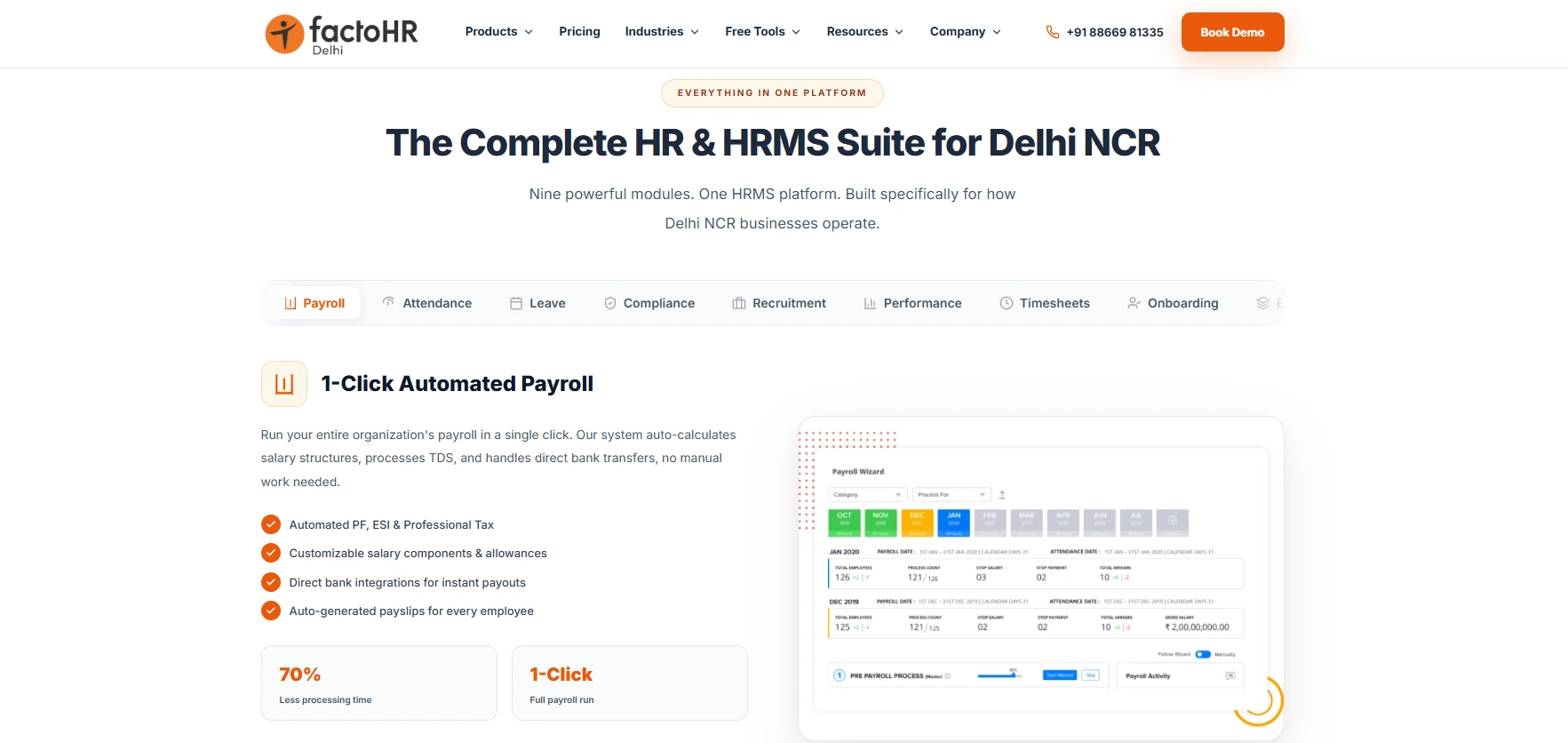
factoHR Delhi is the Delhi NCR arm of factoHR, India’s most comprehensive HRMS for Indian businesses. The platform manages 2 million+ employees across 20+ countries with deep India-first compliance. Mobile app rating 4.6 on G2 and 4.7 on Capterra. Dedicated Delhi NCR onboarding team handles multi-state payroll setup for businesses operating across Delhi, Noida, Gurugram, Faridabad, and Ghaziabad.
Key Strengths:
- Strongest India compliance depth: Delhi Min Wages auto-update, multi-state PT (Delhi nil, Haryana Rs 200, UP variable), EPFO regional office routing, full Code on Wages 2025 readiness
- 1-click payroll for entire team in 7 minutes with auto PF, ESI, TDS calculation
- Real Delhi NCR support team that picks up the phone and joins setup calls
- Tight integration across all 9 modules: payroll, attendance, leave, performance, recruitment, ESS, expense, onboarding, timesheets
- Mobile-first design with selfie + GPS attendance for field teams
Weaknesses:
- Most powerful when used as full suite. Less ideal as standalone module
- Premium pricing for smallest teams (under 25 employees)
Pricing: Starts at Rs 75 per employee per month with annual contracts. Custom enterprise pricing for 500+ employees.
Best for: Indian businesses 50 to 5,000 employees with Delhi NCR operations needing strong multi-state compliance. Book a free 30-minute demo.
2. Keka HR: Best for Mid-Market Companies (100-1,000 Employees)
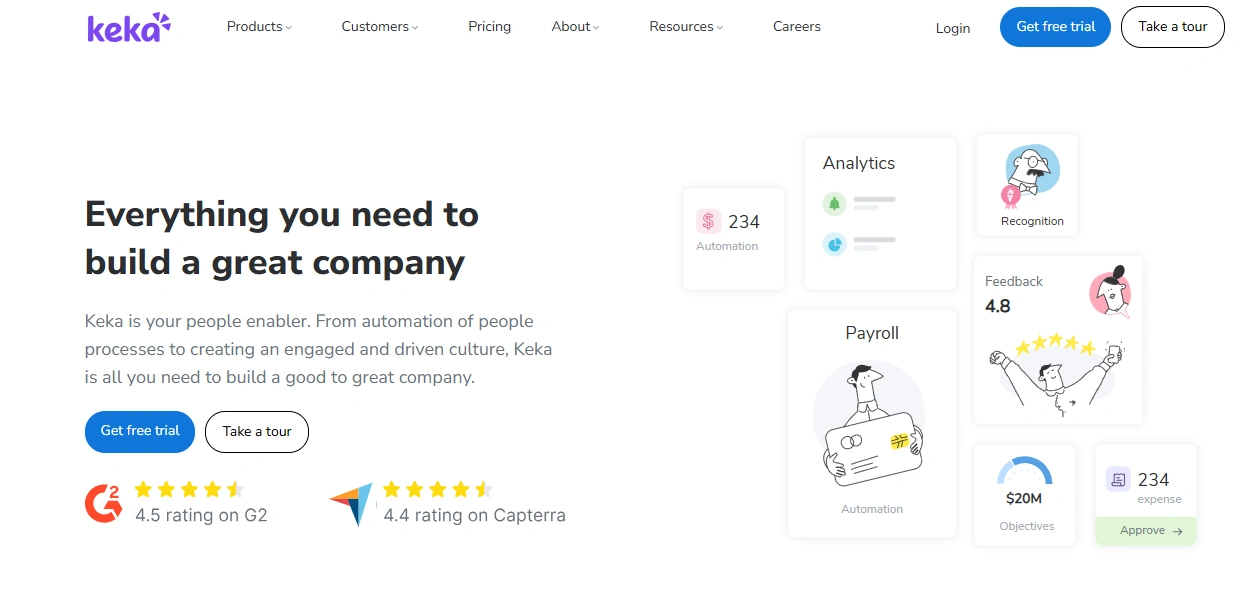
Keka HR has built strong adoption among Indian SaaS, IT, and fintech companies through a polished UI and modern user experience. The platform covers payroll, attendance, performance, and recruitment with above-average UX, although it uses plan-based pricing instead of per-employee.
Key Strengths:
- Modern, intuitive interface that requires minimal training
- Strong performance management module with goal tracking and 360 feedback
- Good reporting and analytics dashboards
- Active product development cycle
Weaknesses:
- Plan-based pricing is expensive for smaller teams
- Compliance depth less than India-first specialists
- Customer support response varies
Pricing: Starts at Rs 9,999 per month for up to 100 employees on Foundation plan.
Best for: Mid-market Indian SaaS or fintech companies wanting modern UX.
3. Zoho People: Best for Zoho Ecosystem Users
Zoho People is part of the broader Zoho Suite (Zoho Books, Zoho CRM, Zoho Mail). It works exceptionally well for companies already running other Zoho products. The HRMS covers basic to advanced HR processes with deep customisation, although standalone the product is more lightweight than HRMS-focused competitors.
Key Strengths:
- Native integration with Zoho Books, Zoho CRM, Zoho Mail
- Affordable per-employee pricing
- Good API and customisation depth
- Reliable global infrastructure
Weaknesses:
- India compliance is solid but less deep than India-first platforms
- Customer support response times can vary
- Best used inside Zoho ecosystem, less valuable standalone
Pricing: Starts at Rs 60 per employee per month on Premium plan.
Best for: Companies already using Zoho Books, Zoho CRM, or other Zoho products.
4. Darwinbox: Best for Indian Enterprises (500+ Employees)
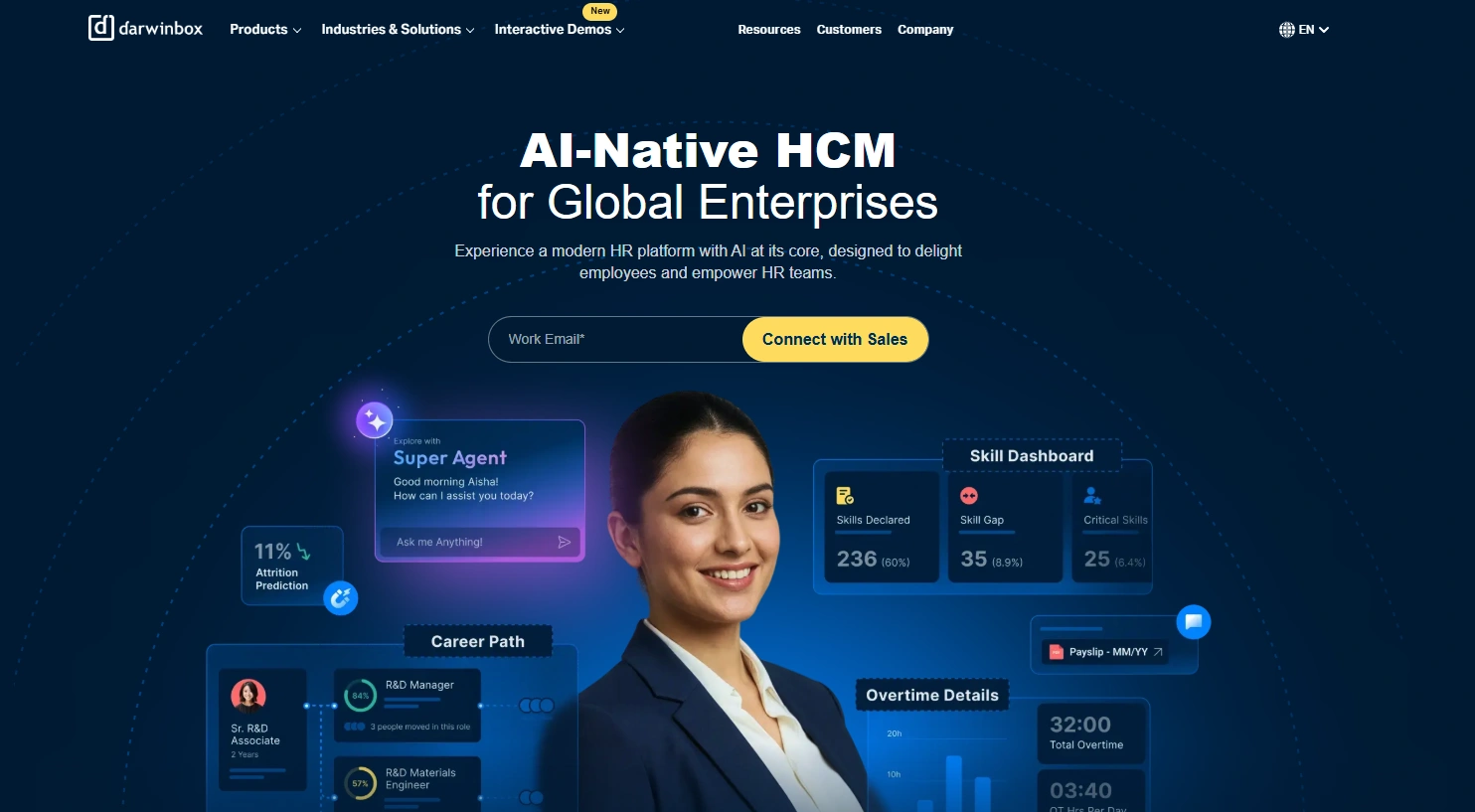
Darwinbox is the Indian HRMS choice for large enterprises like Lenskart, JSW, Adani, and Genpact. The platform is highly configurable, supports complex multi-entity setups, and handles global rollouts. Implementation takes 8-12 weeks and pricing is enterprise-tier.
Key Strengths:
- Enterprise-grade workflow customisation
- Multi-entity, multi-country HR policy management
- Strong analytics with AI-driven insights
- Integration with global payroll providers and ERPs
Weaknesses:
- Implementation timeline 8-12 weeks (slow vs SMB tools)
- Custom pricing only, opaque for buyers
- Steeper learning curve for HR teams
Pricing: Custom quote. Typical enterprise contracts Rs 100-300 per employee per month.
Best for: Indian enterprises 500+ employees, especially multi-country operations.
5. greytHR: Best for SMB Payroll-First Buyers
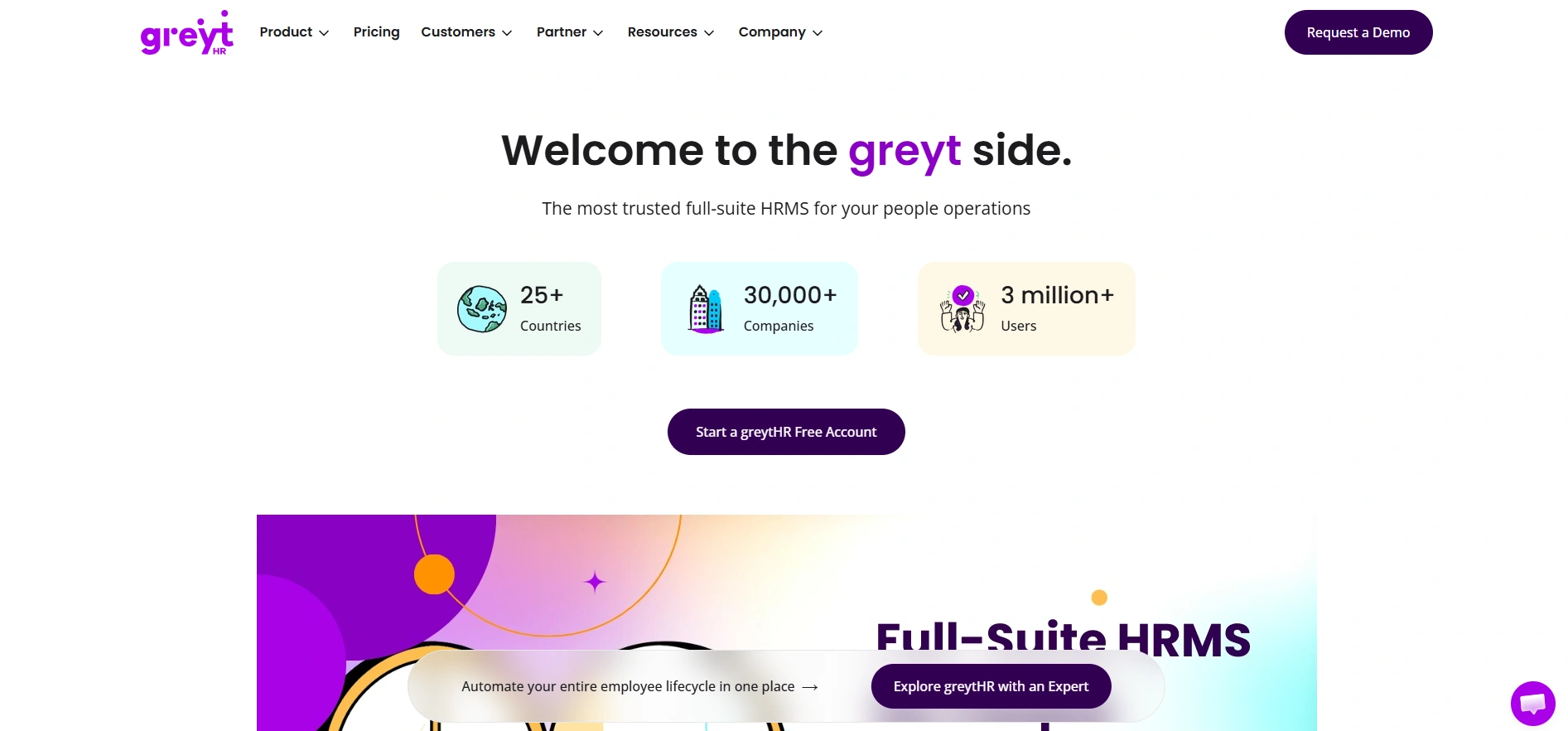
greytHR is one of India’s oldest HRMS platforms. Strong reputation in payroll and statutory compliance. The UI feels dated compared to newer entrants but the underlying compliance engine is reliable. Used by 20,000+ Indian businesses primarily for payroll and ESS.
Key Strengths:
- Mature India compliance engine
- Affordable for SMB payroll needs
- Wide customer base
- Reliable statutory updates
Weaknesses:
- UI feels dated compared to 2020+ HRMS
- Mobile app functional but less polished
- Performance management module limited
Pricing: Starts at Rs 3,495 per month for 50 employees on Welter plan.
Best for: SMB Indian businesses where payroll is primary, advanced HR features secondary.
6. HRMantra: Best for Custom Enterprise Workflows
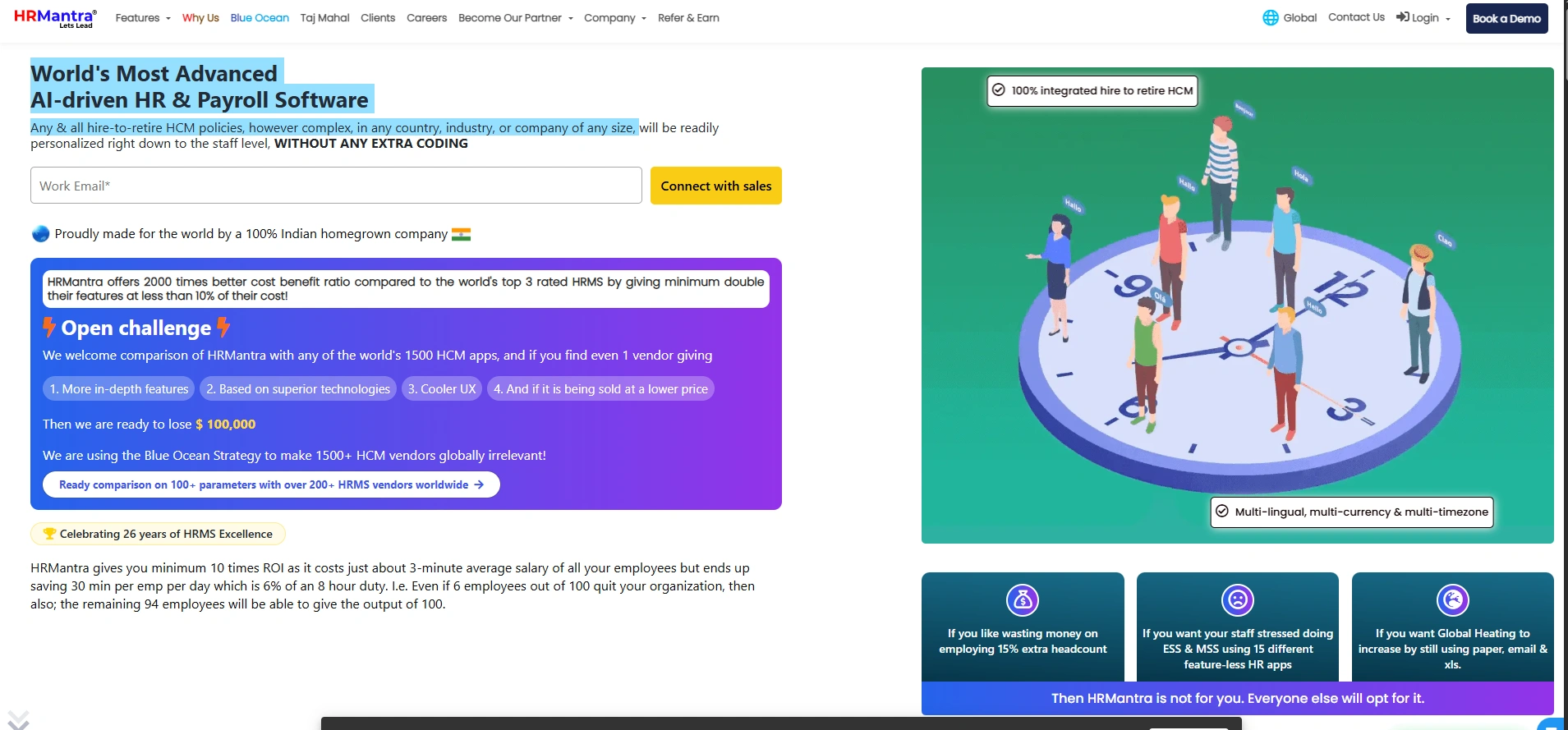
HRMantra serves large Indian enterprises that need unusual workflow customisation. Shift-based leave logic, complex approval matrices, on-premise deployment, and custom compliance rules. Steep learning curve but suits requirements off-the-shelf tools cannot handle.
Key Strengths:
- Highly configurable leave types and approval matrices
- Both cloud and on-premise deployment
- Shift-based logic for manufacturing and BPO
- Strong audit trail for compliance-heavy industries
Weaknesses:
- UI not as modern as cloud-native competitors
- Implementation requires consultant involvement
- Mobile app limited
Pricing: Custom quote. Aimed at 200+ employee organisations.
Best for: Large enterprises with unusual workflow requirements.
7. Pocket HRMS: Best for Small Business Under 100 Employees
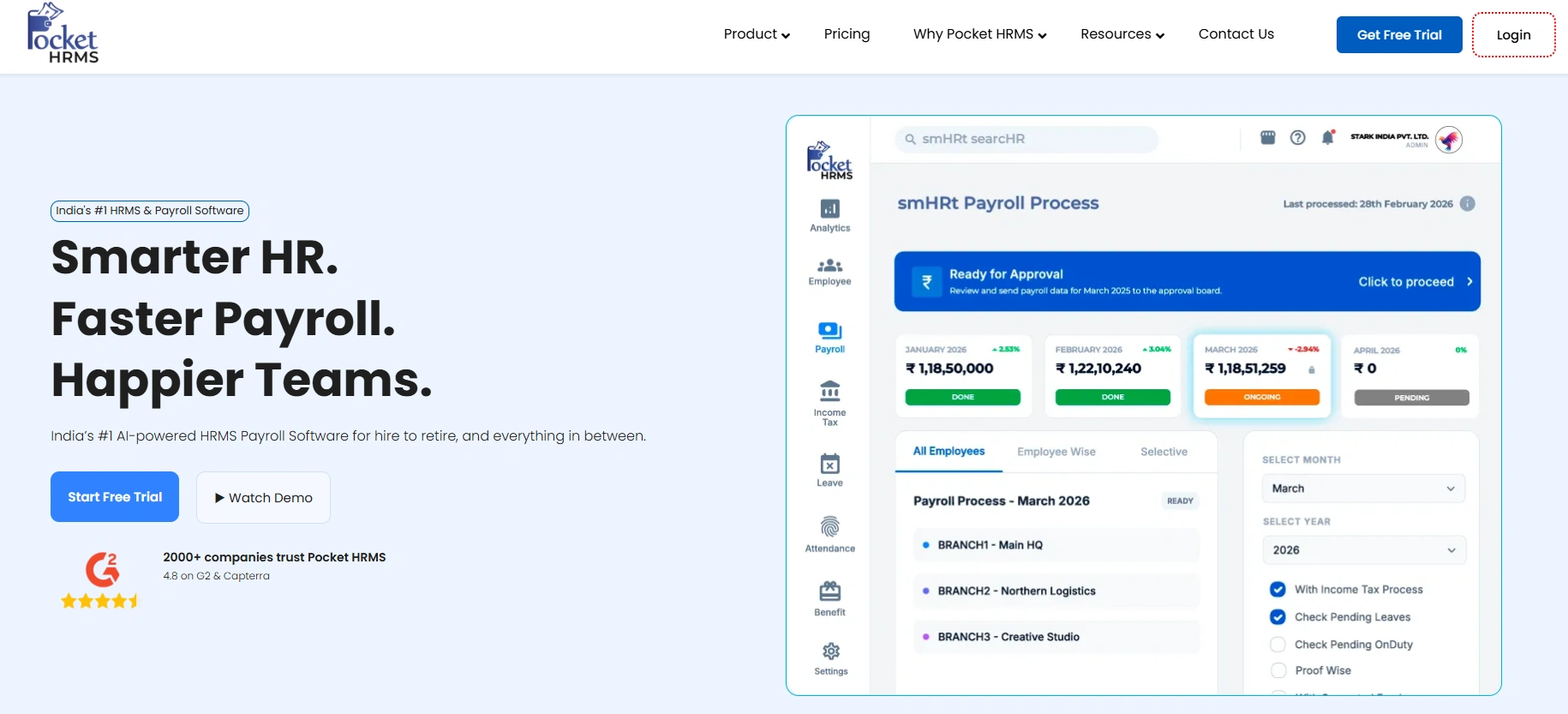
Pocket HRMS targets small and mid-sized Indian businesses with a clean mobile experience and affordable pricing. Covers standard requirements without enterprise-level depth.
Key Strengths:
- Affordable for small teams
- Clean mobile-first interface
- India-focused features
- Quick implementation
Weaknesses:
- Limited customisation depth
- Smaller ecosystem of integrations
- Performance management module basic
Pricing: Starts at Rs 90 per employee per month.
Best for: Small Indian businesses 10-100 employees seeking affordable HRMS with leave and payroll.
8. HROne: Best for Mid-Market with Field Teams
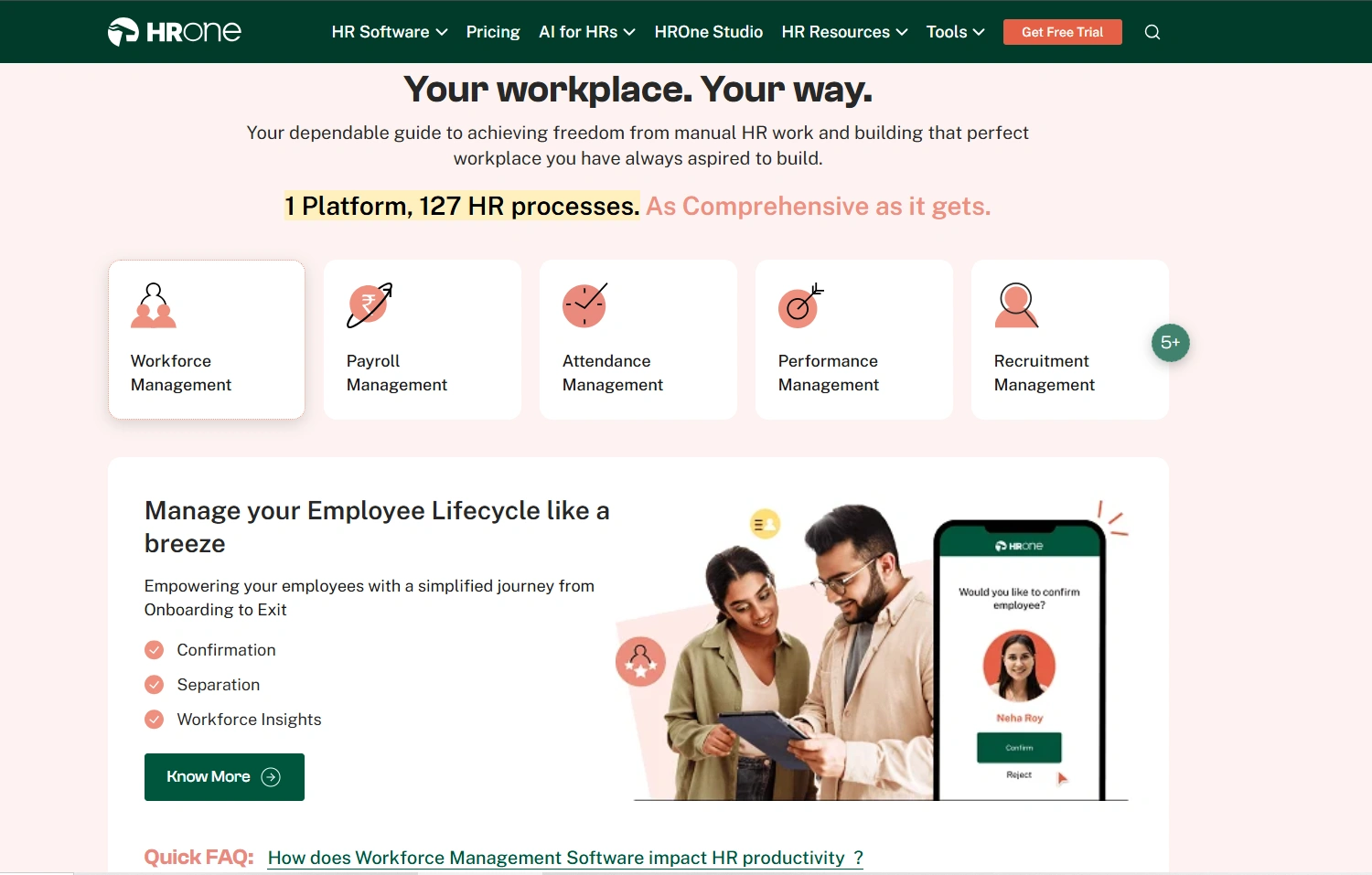
HROne is a Noida-based HRMS catering to mid-market Indian businesses with field-heavy operations. Mobile-first with strong geo-aware attendance and leave features. Good fit for distributed teams across multiple offices or work sites.
Key Strengths:
- Strong mobile experience with location capture
- India-specific features built in
- Decent reporting and analytics
- Local Delhi NCR presence
Weaknesses:
- Smaller customer base than top-tier competitors
- Customer support quality varies
- Performance module less mature
Pricing: Starts at Rs 85 per employee per month.
Best for: Mid-market Indian companies with field staff or distributed teams.
9. SAP SuccessFactors: Best for Global Indian Enterprises
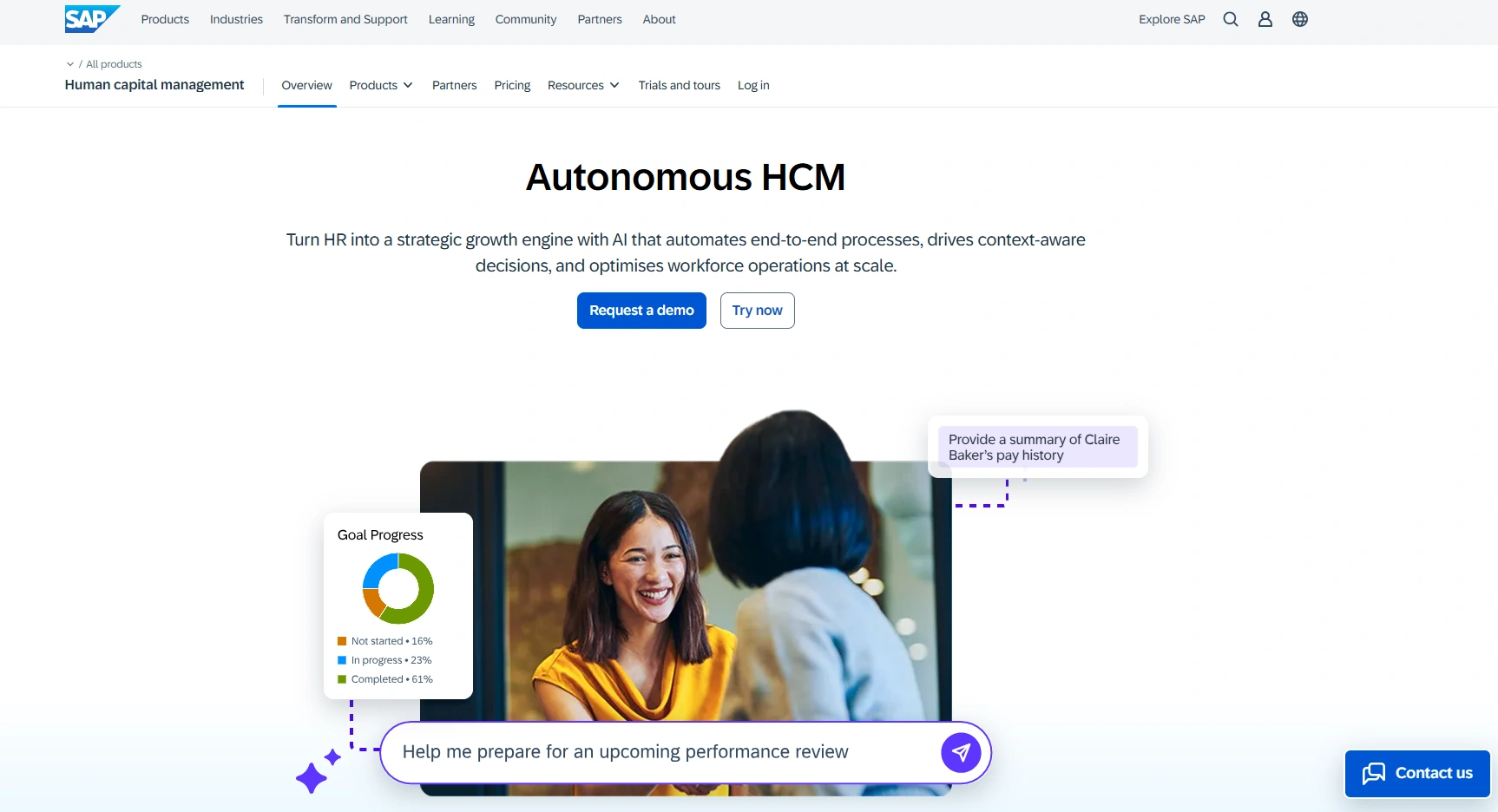
SAP SuccessFactors is the global enterprise HRMS used by Indian arms of Fortune 500 companies. Powerful but expensive. India compliance requires significant configuration. Best fit only for companies already on SAP ECC or S/4HANA.
Key Strengths:
- Enterprise-grade global functionality
- Strong analytics and reporting
- Native integration with SAP ERP
- Dedicated implementation partners across India
Weaknesses:
- India compliance not native, needs config
- Long implementation timelines (6-12 months)
- Highest pricing tier in the listicle
- UI feels dated compared to Indian native HRMS
Pricing: Custom quote. Enterprise tier only.
Best for: Global Indian enterprises already on SAP ecosystem.
10. Wallet HR: Best for SMB with Simple Needs
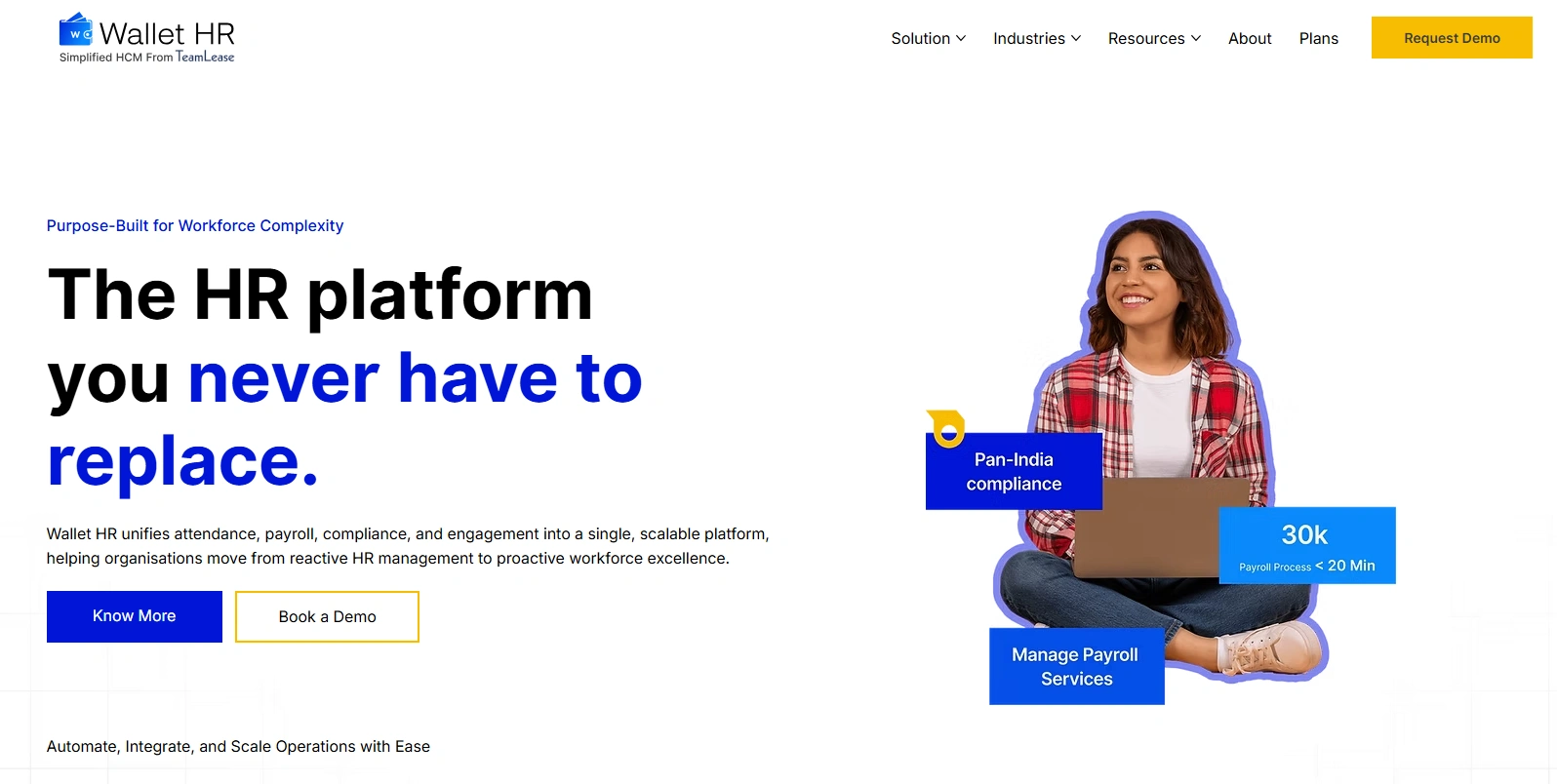
Wallet HR focuses on simplicity for small Indian businesses. Covers core HR requirements without the complexity of enterprise HRMS platforms. Fast implementation, low learning curve, low cost.
Key Strengths:
- Quick setup under 7 days
- Low entry pricing
- Simple mobile-first interface
- Good for first-time HRMS buyers
Weaknesses:
- Limited features for complex policy requirements
- Smaller integration ecosystem
- India compliance moderate, not deep
Pricing: Starts at Rs 50 per employee per month.
Best for: Small Indian businesses 10-50 employees wanting basic HRMS.
Detailed Pricing Comparison
| HRMS | Pricing Model | 50 Employees | 100 Employees | 500 Employees |
|---|---|---|---|---|
| factoHR Delhi | Per employee | Rs 3,750/mo | Rs 7,500/mo | Custom quote |
| Keka HR | Plan-based | Rs 9,999/mo | Rs 9,999/mo | Custom quote |
| Zoho People | Per employee | Rs 3,000/mo | Rs 6,000/mo | Rs 30,000/mo |
| Darwinbox | Custom | Not targeted | Rs 15,000/mo+ | Rs 75,000+/mo |
| greytHR | Plan-based | Rs 3,495/mo | Rs 6,995/mo | Custom quote |
| HRMantra | Custom | Not targeted | Rs 12,000/mo+ | Rs 60,000+/mo |
| Pocket HRMS | Per employee | Rs 4,500/mo | Rs 9,000/mo | Not targeted |
| HROne | Per employee | Rs 4,250/mo | Rs 8,500/mo | Rs 42,500/mo |
| SAP SuccessFactors | Custom | Not targeted | Not typical | Rs 200,000+/mo |
| Wallet HR | Per employee | Rs 2,500/mo | Rs 5,000/mo | Not targeted |
Best HRMS by Team Size
| Team Size | Recommended HRMS | Why |
|---|---|---|
| Under 25 employees | Wallet HR, Pocket HRMS | Affordable, simple, fast setup |
| 25-100 employees | factoHR Delhi, Pocket HRMS, Zoho People | Affordable per-employee pricing with India compliance |
| 100-500 employees | factoHR Delhi, Keka HR, HROne, greytHR | Mid-market features with strong India support |
| 500-2,000 employees | factoHR Delhi, Darwinbox, HRMantra | Enterprise workflows with India depth |
| 2,000+ employees | factoHR Delhi, Darwinbox, SAP SuccessFactors | Multi-entity, multi-country, full enterprise scale |
Best HRMS by Industry
| Industry | Top Picks | Why |
|---|---|---|
| Manufacturing | factoHR Delhi, HRMantra, greytHR | Shift management, ESI heavy, Factories Act compliance |
| IT and ITES | factoHR Delhi, Keka, HROne | Project tracking, timesheet integration, modern UX |
| BPO and KPO | factoHR Delhi, HRMantra, Darwinbox | Shift allowance, cab roster, high-volume payroll |
| Hospitality | factoHR Delhi, greytHR, Pocket HRMS | Tip management, split shifts, seasonal workforce |
| Healthcare | factoHR Delhi, Darwinbox, HRMantra | Roster management, NABH compliance, locum staff |
| Retail | factoHR Delhi, Keka, Pocket HRMS | Multi-store attendance, POS integration |
| Startups | factoHR Delhi, Zoho People, Wallet HR | Fast setup, ESOP tracking, rapid hiring |
| Education | factoHR Delhi, greytHR, HRMantra | Faculty workload, UGC compliance, leave during vacations |
Feature Comparison Matrix
| Feature | factoHR Delhi | Keka | Zoho People | Darwinbox | greytHR |
|---|---|---|---|---|---|
| Multi-state PT (Delhi, UP, Haryana) | Yes (auto) | Yes | Yes (with config) | Yes (with config) | Yes |
| Auto PF, ESI, TDS | Yes | Yes | Yes | Yes (with config) | Yes |
| Mobile app (iOS + Android) | Yes | Yes | Yes | Yes | Yes |
| Selfie + GPS attendance | Yes | Yes | Partial | Yes | Partial |
| Biometric integration | Yes (all major brands) | Yes | Yes | Yes | Yes |
| Performance management | Yes (full) | Yes (full) | Yes (basic) | Yes (full) | Yes (basic) |
| Recruitment / ATS | Yes | Yes | Yes (Zoho Recruit add-on) | Yes | Limited |
| Employee Self-Service Portal | Yes | Yes | Yes | Yes | Yes |
| Code on Wages 2025 readiness | Yes | Yes | Partial | Yes | Yes |
| Delhi-based support team | Yes | No (Hyderabad) | No (Chennai) | No (Hyderabad) | No (Bengaluru) |
Common HRMS Implementation Mistakes Indian Businesses Make
| Mistake | Better Approach |
|---|---|
| Picking based on feature count | Pick based on India compliance fit + mobile UX. Feature counts misleading. |
| Skipping mobile testing during evaluation | 80 percent of HR interactions happen on mobile. Test the app, not just the web dashboard. |
| Ignoring multi-state PT and compliance | For multi-location teams, verify auto multi-state Professional Tax + Delhi Min Wages updates. |
| Underestimating implementation time | Cloud HRMS claims 2-week setup. Realistic timelines including migration are 4-12 weeks. |
| Forgetting integration with existing systems | Verify biometric, payroll bank file, Tally/Zoho Books integration before signing. |
| No internal champion in the company | HRMS rollouts fail without a dedicated internal HR owner pushing adoption. |
| Skipping demo with your own data | Insist on demo with your real salary structure, leave policy, and employee count. |
| Not budgeting for premium support | Premium support tiers unlock fast resolution. Free tiers mean weeks waiting on tickets. |
How to Migrate from Excel or Old HRMS
Migration is where most Indian HRMS rollouts go wrong. Six steps to do it right.
- Audit current state. Document existing payroll structure, leave policies, attendance rules, and statutory filings. Identify gaps before migration starts.
- Clean employee master data. Standardise employee IDs, designations, departments, PAN, Aadhaar, UAN, bank accounts. Half of migration failures come from messy master data.
- Map salary structures. Pre-migration, document Basic, HRA, Conveyance, Special Allowance, and statutory components per employee. Our deep dive on payroll components in India covers each head.
- Choose go-live month carefully. Never go live in March (FY end), April (appraisal cycle), or December (year-end statutory filings). Best months: June, July, August, September.
- Run parallel for one cycle. Process payroll on both old and new system for one month. Reconcile differences before cutting over fully.
- Train HR + employees. Skipping training is the #1 reason HRMS gets abandoned by month 6. Plan dedicated training sessions.
For deeper coverage, see our complete walkthrough on how to process payroll for Indian businesses.
Final Word
The best HRMS software in India 2026 is the one your HR team and your employees actually use without complaints, that pulls clean data into payroll, and that gets out of your way during compliance audits. For Indian businesses operating across multiple states, the right tool also handles state-specific holidays, multi-state Professional Tax, and EPFO regional office routing without manual configuration.
If you are evaluating HRMS for an Indian business and want a tool that pairs deep India compliance with a polished mobile experience and a real Delhi NCR support team, the right payroll and HR platform is the one with India in its DNA, not a global tool retrofitted for Indian compliance. Book a 30-minute demo and see your real data running through the system.
Frequently Asked Questions
Which is the best HRMS software in India in 2026?
The best HRMS depends on team size and compliance needs. For Indian businesses with multi-state operations, factoHR Delhi leads on India compliance depth, mobile experience, and payroll sync. For mid-market with strong UX needs, Keka HR. For enterprises, factoHR Delhi or Darwinbox. Pick based on India compliance fit, not feature count.
How much does HRMS software cost in India?
Most Indian HRMS costs between Rs 40 and Rs 350 per employee per month. SMB tools like Wallet HR start at Rs 50. Mid-market platforms cost Rs 75-150 per employee. Enterprise solutions like Darwinbox or SAP SuccessFactors use custom quotes averaging Rs 200-500 per employee per month.
Is HRMS software safe for sensitive employee data?
Top Indian HRMS platforms comply with ISO 27001:2022, SOC 2 Type II, and India data localisation requirements under the DPDP Act 2023. Employee data is stored on India-based servers. Role-based access controls ensure only authorised HR personnel can view sensitive payroll information. Verify these certifications during evaluation.
How long does HRMS implementation take in India?
Cloud HRMS platforms typically take 4 to 12 weeks for full implementation. Simple SMB tools can go live in 7 to 14 days. Mid-market platforms take 3 to 6 weeks. Enterprise platforms like Darwinbox or SAP SuccessFactors need 8 to 16 weeks including data migration, policy mapping, and integration testing.
Can HRMS handle multi-state Indian compliance?
Top India-first platforms handle multi-state compliance out of the box. Delhi has zero Professional Tax, Haryana charges Rs 200, UP varies. Strong HRMS auto-applies the correct rule per employee work location. Verify by asking the vendor to demo Delhi, Noida, and Gurugram payroll runs in the same cycle.
Does HRMS software integrate with biometric attendance?
Most enterprise-grade HRMS platforms integrate with biometric attendance via API or push sync. Common brands supported: eSSL, Matrix, Mantra, ZKTeco, RealTime. Punch data flows to attendance, then to payroll, automatically. See our complete guide on biometric attendance systems for integration patterns.
What features should I look for in HRMS software?
Must-have features include payroll automation, multi-state PT, auto PF + ESI + TDS, attendance with biometric integration, leave management, performance management (KRA + KPI tracking), employee self-service mobile app, recruitment ATS, expense management, and compliance reporting for the Code on Wages 2025.
Can HRMS handle Indian payroll components like HRA, LTA, and Special Allowance?
Yes. India-first HRMS platforms ship with pre-configured salary structures including Basic, HRA, Conveyance, LTA, Medical, Special Allowance, and statutory deductions. Custom components can be added per company policy. Mid-month joiners and exits are handled automatically with pro-rata calculations.
Does HRMS handle the Code on Wages 2025?
Yes, top India-first platforms have been Code on Wages 2025 ready since November 2025 when the four labour codes became effective. This includes mandatory wage slip issuance, revised PF and ESI thresholds, and updated overtime calculation rules. Verify the vendor’s compliance roadmap during demo.
Can HRMS calculate leave encashment and gratuity?
Yes. India-first HRMS platforms calculate leave encashment per Section 10(10AA) (Rs 25 lakh exemption at retirement) and gratuity under Section 10(10) (Rs 20 lakh ceiling). The full and final settlement process pulls these automatically. See our guide on leave encashment rules in Delhi and the FNF process.
